
New nitrous oxide project at Chalmers University of Technology
Last week, researcher Frank Persson from Water, Environment and Technology at Chalmers was informed that his project proposal, “Microbial-based strategies to reduce nitrous oxide emissions from wastewater treatment: Insights from laboratory and full-scale systems”, has been awarded 554 000 Euro.
In brief, the project aims to measure (and understand) seasonal variations in the microbial community and its nitrous oxide emissions at municipal wastewater treatment plants (WWTP) through continuous measurements, for example from activated sludge at the Klagshamn WWTP in Malmö, membrane bioreactor (MBR), membrane-aerated biofilm reactor (MABR) in high-load activated sludge and integrated biofilm and activated sludge process (IFAS) at the Sjölunda WWTP in Malmö, as well as in aerobic granular sludge (AGS) and in a moving-bed biofilm reactor (MBBR) at the Rya WWTP in Gothenburg. In the laboratory, the kinetics associated with emissions from biofilm and sludge will be studied. Based on the findings, the project aims to learn how to use (and, where necessary, develop) hybrid models to predict emissions and test measures.
In addition to Frank, and a PhD student to be employed at Chalmers, Oskar Modin and Britt-Marie Wilén at Chalmers, Erik Lindblom at Lund University and David Gustavsson at VA SYD are also participating in the project. However, representatives from several wastewater treatment plants will participate in the project in various ways over the course of the five-year project.
Read a summary of the project.
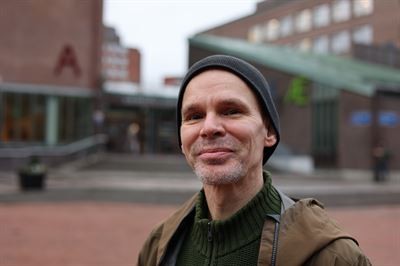
Frank Persson
Belongs to project
Reduce the emissions of nitrous oxide from wastewater treatment