
Field trials with sludge biochar in the coming years!
The Swedish Innovation Agency, Vinnova, has approved a project that includes field trials with sludge biochar at eleven different sites in Sweden during 2027 and 2028.
We do not yet know whether we should classify sludge biochar as a phosphorus fertiliser and/or soil improver. We therefore now need to carry out the field trials we are planning as part of the new project Sludge Biochar – From Pollution Risk to a Safe Circular Resource, which starts immediately and concludes in May 2029.
Roslagsvatten is leading the project, but those actually carrying out the field trials are the Swedish University of Agricultural Sciences (SLU), the Rural Economy and Agricultural Societies (Hushållningssällskapet), Biototal and a couple of farmers. Karlstad University and SLU will study the pelletisation of sludge biochar. Biototal will study the transport and storage of sludge biochar and, together with the Rural Economy and Agricultural Societies, the spreading of sludge biochar on arable land. Roslagsvatten and VA SYD are producing the sludge biochar to be studied within the project.
VA SYD is leading the work package on markets, business models and financing solutions, in which the companies Biokolprodukter and Spinverse are also participating, together with Svenskt Vatten, Roslagsvatten and advisers from the Rural Economy and Agricultural Societies.
The project has been granted nearly SEK 5.5 million and the total project budget is SEK 7.8 million.
Vinnova’s justification was as follows:
The application develops and verifies the use of sludge biochar for more resource-efficient and circular sludge management, with the aim of reducing emissions, eutrophication and environmental risks. The application, together with the interview, is assessed as describing a project with a systems approach and the potential to generate benefits for the water and wastewater sector and agriculture. The consortium is considered to be well-composed, with clearly committed and co-funding stakeholders, as well as strong ties to the agricultural sector. This provides a solid foundation for implementation and benefits. Furthermore, the implementation plan is considered to be concrete, grounded in research and the practical experience of stakeholders, which together provide a strong basis for success.
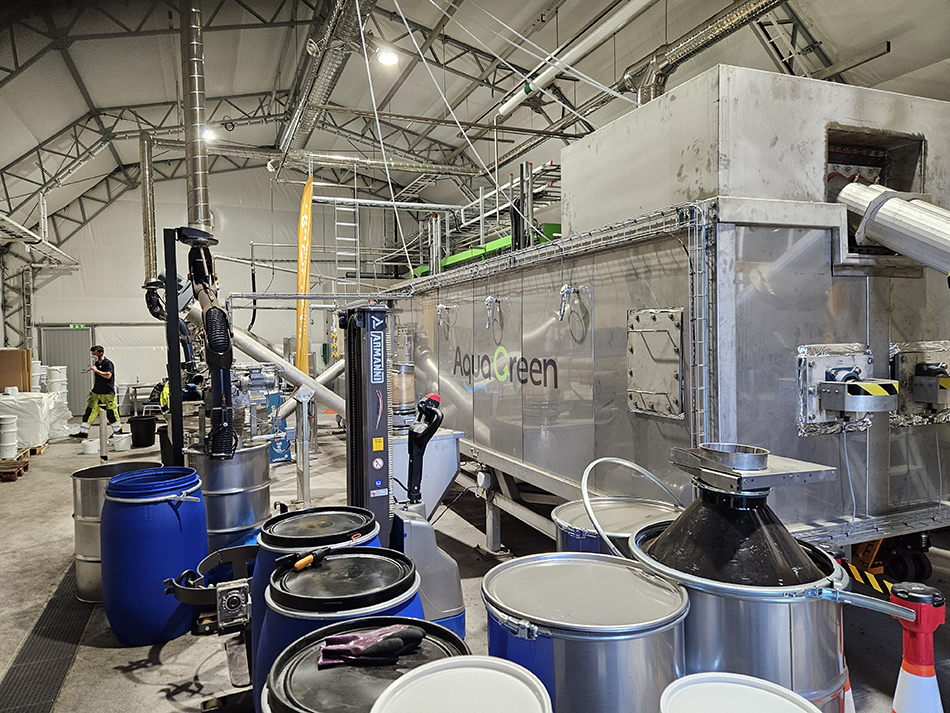
The pilot plant at Ellinge will produce sludge biocharl for the project.